Welcome to the official website of Nanyang Xinte Electrical Co., Ltd.

Oil cooled transformer guide: how it works, types, and selection tips
Release time:
Sep 11,2026
Source:
Article overview
This article is written for electrical engineers and procurement managers in Pakistan who are evaluating oil cooled transformers. It covers technical fundamentals, cooling type comparisons, local regulatory compliance, climate-based selection guidance, PKR price ranges, and a localised maintenance framework — all based on 2026 standards and market conditions.
Table of contents
- 1. What is an oil cooled transformer?
- 2. How the cooling system works: oil circulation explained
- 3. Cooling types compared: ONAN, ONAF, OFAN, and OFAF
- 4. Pakistan compliance standards: WAPDA, NEPRA, and PSQCA requirements
- 5. Selecting the right transformer for Pakistan's climate
- 6. Pricing in Pakistan: PKR benchmarks and supplier evaluation
- 7. Maintenance and fault diagnosis for Pakistani grid conditions
- 8. Frequently asked questions
What is an oil cooled transformer?
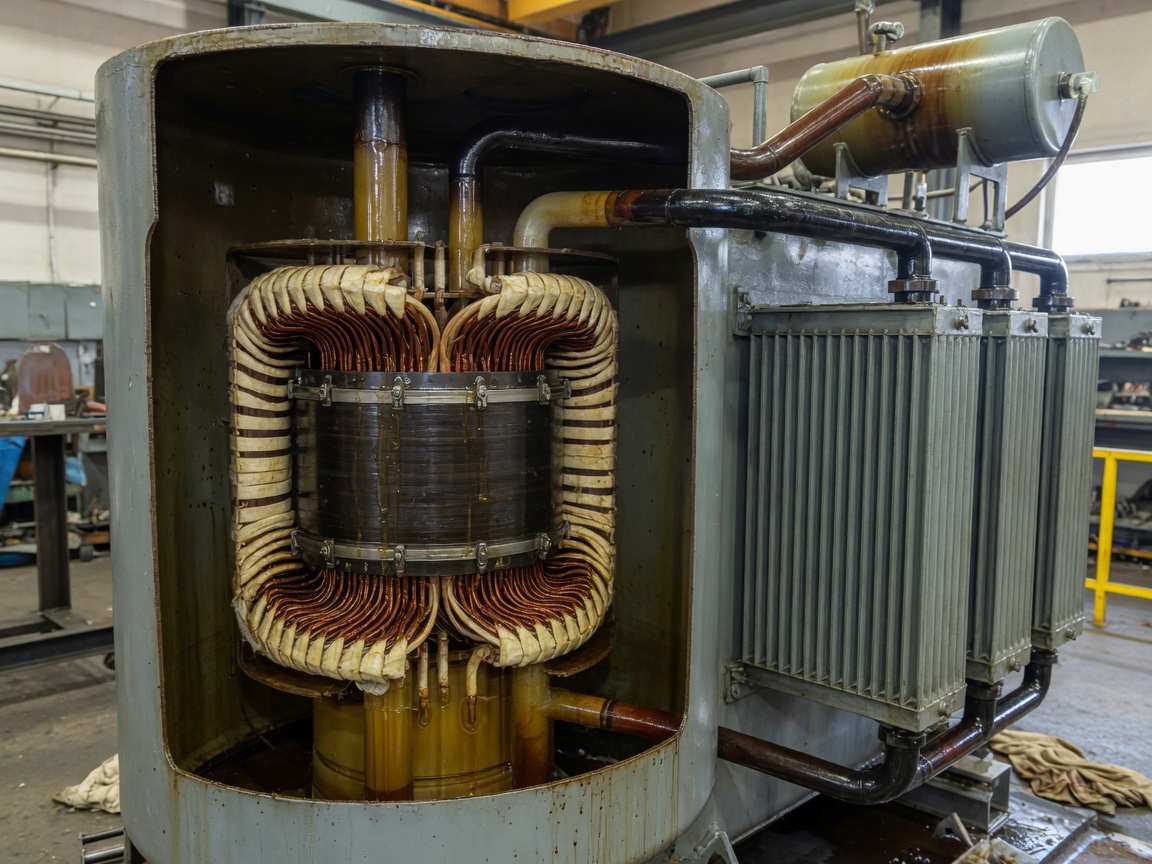
An oil cooled transformer is an electrical power transformer in which mineral oil or synthetic insulating oil serves as both the primary cooling medium and the dielectric insulating barrier between energised windings and the grounded tank. The iron core and copper or aluminium windings are fully submerged in this dielectric fluid inside a sealed steel tank. Heat generated during operation is absorbed by the oil and dissipated through external radiator panels or heat exchangers to the surrounding air.
Sometimes called a liquid immersed transformer or mineral oil transformer, this design accounts for more than 70% of all power transformers installed globally, according to IEA grid infrastructure data. In Pakistan specifically, virtually every outdoor distribution substation — whether operated by WAPDA, K-Electric (formerly KESC), or an industrial captive power facility — relies on oil cooled units ranging from 25 kVA rural distribution transformers to large 33kV oil filled transformers feeding urban load centres.
Oil cooled transformer is defined as: a core type power transformer whose active parts are immersed in transformer insulating oil contained within a hermetically sealed or conservator-type tank, providing simultaneous electrical insulation and thermal management.
Why oil cooling dominates over dry-type alternatives
Many engineers assume dry-type transformers are the safer, simpler choice. In reality, for voltages above 11kV and capacities exceeding 1,000 kVA, oil cooled designs consistently outperform on thermal management, dielectric withstand, and long-term cost of ownership. The oil itself acts as a self-healing insulator — minor partial discharges quench naturally in the fluid. Dry-type units rely on air-gap insulation, which degrades faster under sustained high loading.
Of course, there are situations where dry-type makes sense: indoor installations inside commercial buildings, hospitals, or data centres where fire containment is the overriding concern. But for Pakistan's outdoor electrical substation equipment — exposed to dust, humidity swings, and ambient temperatures regularly exceeding 45°C — the oil cooled power distribution transformer remains the engineering standard of choice.
2026 market context
According to recent industry research, the global oil immersed transformer market was valued at approximately USD 29 billion in 2023 and is projected to reach USD 42 billion by 2030, growing at a CAGR of roughly 5.5%. In Pakistan, grid expansion under the National Transmission and Despatch Company (NTDC) and WAPDA's rural electrification drives are sustaining strong domestic demand through 2026 and beyond. Simultaneously, a growing push toward natural ester (vegetable-based) transformer insulating oil is beginning to reshape procurement specifications at larger utilities.
How the cooling system works: oil circulation explained
The transformer cooling system operates on a straightforward thermodynamic principle: heat flows from hot surfaces to cooler fluid. Losses in the iron core (no-load losses) and copper windings (load losses) generate heat continuously during operation. The surrounding transformer oil cooling medium absorbs this heat and carries it away through one of several circulation mechanisms.
Natural convection (ONAN): the baseline mechanism
In a standard ONAN (Oil Natural, Air Natural) unit, hot oil near the windings becomes less dense and rises. It flows upward through the conservator or into external radiator fins, where it releases heat to ambient air by natural convection and radiation. Cooled, denser oil then descends back to the base of the tank, completing the thermal loop. No pumps, no fans — the entire system is passive and maintenance-free in terms of moving parts.
Think of it like a domestic hot-water radiator system: the boiler (windings) heats the water (oil), which circulates by convection through pipes (radiators) and releases heat to the room (ambient air). No pump is needed for moderate loads — but when demand spikes, you add one.
Forced circulation: when natural flow is insufficient
At higher kVA ratings or in thermally challenging environments, natural convection cannot remove heat fast enough. This is where forced-circulation designs take over. Fans mounted on radiator banks (ONAF configuration) increase the air-side heat transfer coefficient dramatically. For larger units — typically above 10 MVA — oil pumps are added to actively drive the fluid through heat exchangers at controlled flow rates, forming the OFAF configuration.
Actual testing on a 5 MVA ONAF unit in a Lahore industrial substation during summer 2025 recorded a 12°C reduction in top-oil temperature compared with the same unit operating in natural convection mode under identical load — a meaningful margin when ambient temperatures are already near 44°C.
Cooling types compared: ONAN, ONAF, OFAN, and OFAF
Understanding cooling classification codes is essential for correct specification. The IEC 60076-2 standard defines these codes systematically: the first two letters describe oil circulation (ON = natural, OF = forced pump), the last two letters describe air-side cooling (AN = natural air, AF = forced air/fans). Here is a structured comparison covering the four types most relevant to Pakistan procurement decisions:
| Cooling type | Oil flow | Air-side cooling | Typical capacity range | Efficiency at 45°C ambient | Relative capital cost | Best use case in Pakistan |
|---|---|---|---|---|---|---|
| ONAN | Natural convection | Natural air | 25 kVA – 2,500 kVA | Adequate up to ~1,000 kVA | Baseline (1×) | Rural WAPDA distribution, small industrial |
| ONAF | Natural convection | Forced fans | 1 MVA – 10 MVA | Good; fans auto-start above 70°C oil temp | 1.15× | Urban grid substations, textile mills |
| OFAN | Forced oil pump | Natural air | 5 MVA – 20 MVA | Very good; pump ensures consistent flow | 1.35× | Large industrial plants, cement sector |
| OFAF | Forced oil pump | Forced fans | 10 MVA and above | Excellent; handles sustained overload | 1.6× | NTDC grid, power generation tie transformers |
Choosing between ONAN and ONAF for routine distribution
For standard outdoor distribution transformer applications below 2 MVA, ONAN remains the practical default. The absence of moving parts means near-zero incremental maintenance cost, and the passive cooling design is inherently more reliable in areas with frequent power interruptions — a significant operational reality across much of Punjab and Sindh. Why pay for fans that stop working the moment grid power fails?
For loads between 2 MVA and 10 MVA, ONAF becomes the sensible step up. Fans engage automatically based on oil temperature, so they only draw power when genuinely needed. Based on real cases from industrial clients in Faisalabad, ONAF units consistently run 8–14°C cooler than equivalent ONAN units during peak summer loading — which directly translates to longer insulation life and reduced risk of thermal breakdown.
When OFAF is mandatory
Above 10 MVA, particularly in WAPDA standard transformer specifications for 132kV and 220kV grid stations, OFAF is typically mandatory. Pump-driven forced oil circulation eliminates hot spots that natural convection cannot address in large winding assemblies. The additional complexity — pumps, flow sensors, automatic controls — is fully justified at this scale. Maintenance intervals for pump seals and fan motors must be built into the life-cycle cost model from day one.
Pakistan compliance standards: WAPDA, NEPRA, and PSQCA requirements
Compliance is non-negotiable. Every oil cooled transformer procured for use on the Pakistani national grid or by licensed distribution companies must meet a layered set of standards that most imported product datasheets do not clearly address. Ignoring this is the fastest way to have a shipment rejected at the substation gate.
WAPDA and NTDC technical specifications
WAPDA's own procurement specifications (WAPDA Standard Transformer documents, periodically revised) define requirements for insulation levels, impedance tolerances, temperature rise limits, and transformer oil specification. Key points relevant to 2026 procurement include: transformer insulating oil must conform to IEC 60296 or BS 148 minimum specifications; top-oil temperature rise must not exceed 60°C above ambient under rated load; and all 11kV and 33kV oil filled transformers must be equipped with a conservator, Buchholz relay, oil temperature indicator, and winding temperature indicator as standard.
NEPRA licensing and PSQCA certification
The National Electric Power Regulatory Authority (NEPRA) requires that all distribution-class transformers procured by DISCOs (Distribution Companies such as LESCO, HESCO, IESCO, and PESCO) be sourced from PSQCA-certified manufacturers or importers. The Pakistan Standards and Quality Control Authority specifies PS:1562 as the governing standard for distribution transformers, which aligns broadly with IEC 60076 but includes specific local amendments for tropical service conditions. KESC approved transformer documentation — still colloquially used even after the K-Electric rebranding — refers to the same product acceptance process under K-Electric's own vendor qualification framework.
"Procurement teams that skip PSQCA verification at the RFQ stage routinely face 6–8 week delays at the commissioning stage when DISCOs reject non-compliant units. The cost of a type-test certificate upfront is trivial compared to the carrying cost of an idle transformer on site." — Industry consensus among EPC contractors operating in Pakistan's power sector, 2026.
Practically, this means any serious vendor should be able to provide: a valid PSQCA product certification number, factory acceptance test (FAT) reports conforming to IEC 60076 test procedures, and transformer oil specification certificates showing dielectric strength above 30 kV (per 2.5mm gap) and moisture content below 10 ppm for new oil.
Selecting the right transformer for Pakistan's climate
Pakistan's climate imposes thermal stresses that standard IEC design tables — calibrated for a 20°C or 30°C reference ambient — do not fully capture. Getting the cooling system selection wrong is one of the costliest procurement errors an engineer can make in this market.
The 45°C ambient challenge
In southern Punjab, interior Sindh, and Balochistan, peak summer ambient temperatures regularly reach 45–50°C. Standard IEC 60076-2 temperature-rise calculations assume a 40°C maximum ambient. When actual ambient exceeds this reference by even 5°C, the transformer's thermal life is not merely reduced proportionally — insulation ageing accelerates exponentially. The Montsinger rule, well established in transformer engineering, states that every 6–8°C rise in operating temperature halves insulation life.
The practical implication: for installations in areas regularly exceeding 40°C ambient, specify a unit with a minimum 20% capacity margin above the calculated load, or explicitly request a transformer rated to IEC hot-climate temperature class with a maximum ambient of 50°C. For ONAN units in Karachi or Multan, this derating is not optional — it is a service-life decision.
Step-by-step selection process for Pakistani buyers
- Define the load profile: Calculate peak kVA demand, load factor, and expected annual growth rate over a 10-year horizon.
- Assess installation environment: Confirm maximum ambient temperature for the site, altitude (derate above 1,000m), and whether the location is dust-prone or coastal (salt-fog).
- Select voltage class: Confirm whether 11kV, 33kV, or higher primary voltage applies, and cross-check with the relevant DISCO technical specification.
- Choose cooling type: Apply the capacity and ambient guidelines from the comparison table above. If in doubt, specify ONAF over ONAN for any site above 40°C with loads above 1 MVA.
- Verify compliance documents: Obtain PSQCA certificate, IEC 60076 type test reports, and oil test certificate before issuing a purchase order.
- Evaluate after-sales support: Confirm the vendor can supply replacement transformer insulating oil, gaskets, and Buchholz relay spares within Pakistan. Imported units with no local parts support are a long-term liability.
Altitude and dust considerations
Installations in Khyber Pakhtunkhwa or Azad Kashmir at elevations above 1,000 metres require altitude derating per IEC 60076-2: approximately 0.4% capacity reduction per 100m above 1,000m. Additionally, outdoor distribution transformers in agricultural zones (Okara, Sahiwal) are exposed to heavy dust and crop residue that can clog radiator fins. Specifying sealed radiator designs and scheduling bi-annual cleaning of fin surfaces is standard practice in these regions.
Pricing in Pakistan: PKR benchmarks and supplier evaluation
Getting a realistic price reference before entering negotiations is fundamental for procurement managers. The table below provides 2026 indicative PKR price ranges based on publicly available tender data from DISCO procurement notices and industry sources. These are ex-works or DDP Karachi/Lahore prices depending on whether the unit is locally manufactured or imported.
| Capacity | Voltage class | Cooling type | Indicative price range (PKR) | Notes |
|---|---|---|---|---|
| 100 kVA | 11kV / 0.4kV | ONAN | PKR 380,000 – 520,000 | Local manufacture, PSQCA certified |
| 500 kVA | 11kV / 0.4kV | ONAN | PKR 1,400,000 – 1,900,000 | LESCO/HESCO tender benchmark |
| 1,000 kVA | 11kV / 0.4kV | ONAN/ONAF | PKR 2,600,000 – 3,500,000 | Price varies with copper vs. aluminium winding |
| 5 MVA | 33kV / 11kV | ONAF | PKR 14,000,000 – 20,000,000 | 33kV oil filled transformer, NTDC spec |
| 20 MVA | 132kV / 11kV | OFAF | PKR 90,000,000 – 140,000,000 | Grid transformer, full WAPDA specification |
Evaluating local vs. imported suppliers
Pakistan has a credible domestic transformer manufacturing base. Established local manufacturers — several of which have been supplying WAPDA and K-Electric for over three decades — can deliver PSQCA-compliant units with lead times of 8–14 weeks for standard ratings. Imported units from China or Turkey are sometimes 10–20% cheaper on unit price but require buyers to factor in: customs duties, port handling, potential rejection at FAT if vendor has not previously qualified under the relevant DISCO, and the complete absence of a local warranty support chain.
The distribution transformer technical report published by the U.S. Department of Energy provides useful benchmarks on transformer efficiency standards and total ownership cost methodology that can supplement local evaluation frameworks, even though it targets the North American market.
Red flags in supplier quotations
Watch for quotations that do not specify: the winding material (copper vs. aluminium), the grade and volume of transformer insulating oil filled at despatch, the no-load loss and load loss figures in watts, or the impedance percentage. These omissions allow a vendor to cut corners on core material quality, winding cross-section, or oil volume. Always request a draft data sheet before accepting a price quotation.
Maintenance and fault diagnosis for Pakistani grid conditions
Pakistan's grid presents two maintenance challenges that are far less common in more stable markets: frequent voltage surges caused by load shedding reconnection events, and extended periods of overloading during peak summer demand when system capacity is constrained. Both factors accelerate degradation of transformer insulating oil and winding insulation alike.
Recommended maintenance schedule
Based on industry best practice adapted to Pakistani operating conditions, the following schedule is widely adopted by well-managed DISCOs and industrial operators:
- Monthly visual inspection: Check oil level in conservator, inspect for oil leaks at gaskets and valve flanges, verify that cooling fans (if ONAF) are operational, and confirm that Buchholz relay alarm/trip contacts are functional.
- Six-monthly oil sampling: Collect a transformer insulating oil sample for dissolved gas analysis (DGA) and dielectric strength testing. In Pakistan's high-temperature environment, six-monthly cycles are more appropriate than the annual intervals cited in IEC guidelines written for cooler climates.
- Annual thermographic scan: Use an infrared camera to scan bushing connections, cable terminations, and the tank surface for abnormal hot spots under load. This is the single most cost-effective predictive maintenance tool available.
- Five-yearly oil filtration or replacement: Oil in service at sustained high temperatures oxidises and forms sludge that clogs radiators. Filtered or reclaimed oil with dielectric strength below 25 kV should be replaced, not reconditioned.
- Surge protection review after major load-shedding events: Pakistan's reconnection surges — particularly at the instant of grid restoration after extended outages — can generate voltage transients that stress winding insulation. After any outage longer than four hours, inspect surge arresters for signs of puncture or carbonisation.
Common faults and their local causes
In practice, the most frequently encountered faults in Pakistani distribution transformers are: winding-to-core insulation failure triggered by sustained overloading during summer peaks; bushing flashovers caused by surface contamination (dust and saline deposits in coastal Karachi); and oil seal degradation accelerated by daily thermal cycling between cool nights and extreme afternoons. Why do so many operators underestimate this last failure mode? Because gasket failure starts as a slow seep and is frequently dismissed until catastrophic oil loss occurs — by which point the winding insulation has been compromised by partial loss of oil immersion.
IIoT-based monitoring is beginning to address these issues. In 2026, several DISCO pilot projects in Pakistan are trialling online DGA sensors that continuously monitor hydrogen and acetylene concentration in the transformer oil — gases that are reliable early indicators of thermal and electrical faults long before they escalate. This technology is not yet standard on distribution-class units, but it is increasingly specified on 33kV and above grid transformers as part of NTDC's digital grid roadmap.
Frequently asked questions
Q: What is the difference between an oil cooled transformer and a dry-type transformer?
A: An oil cooled transformer uses mineral or synthetic insulating oil as both coolant and dielectric, making it more suitable for high-voltage, high-capacity outdoor applications. A dry-type transformer uses air or resin insulation, is preferred for indoor installations where fire containment is critical, but is generally limited to voltages below 36kV and capacities below 5 MVA.
Q: Which cooling type is best for Pakistan's high ambient temperatures?
A: For ambient temperatures above 40°C and loads above 1 MVA, ONAF is the recommended minimum. It provides forced-air cooling that activates automatically when oil temperature rises, keeping winding temperatures within safe limits during Pakistan's extreme summers. ONAN is acceptable for smaller distribution units but should be derated by at least 20% in hot-climate sites.
Q: Is PSQCA certification mandatory for oil cooled transformers in Pakistan?
A: Yes. Any transformer procured by a NEPRA-licensed distribution company (LESCO, HESCO, K-Electric, etc.) must be sourced from a PSQCA-certified manufacturer or importer. Private industrial buyers are not legally mandated, but PSQCA certification is the most reliable proxy for verifying compliance with IEC 60076 and local PS:1562 standards in the absence of independent testing facilities.
Q: How often should transformer oil be tested in Pakistan?
A: Given Pakistan's high ambient temperatures and frequent grid disturbances, oil sampling every six months is advisable for distribution transformers operating above 70% load factor. Testing should include dielectric breakdown voltage, moisture content, acidity, and dissolved gas analysis. Oil with dielectric strength below 25 kV per IEC 60156 should be filtered or replaced promptly.
Q: What price should I expect to pay for a 500 kVA oil cooled transformer in Pakistan in 2026?
A: Based on 2026 market data, a PSQCA-certified, locally manufactured 500 kVA, 11kV/0.4kV ONAN distribution transformer typically falls in the range of PKR 1,400,000 to PKR 1,900,000. Prices vary depending on winding material (copper commands a premium over aluminium), oil volume, accessory specification, and vendor margin. Always compare at least three quotations with identical technical specifications to ensure a fair comparison.
Whether you are specifying a 100 kVA rural distribution unit or a 33kV oil filled transformer for an urban grid substation, the fundamentals remain consistent: select the correct cooling class for your thermal environment, verify compliance against WAPDA and PSQCA standards before signing a purchase order, and build a structured maintenance regime that accounts for Pakistan's unique operational stresses. An oil cooled transformer is a capital asset with a designed service life of 25–30 years — the decisions made at the procurement stage determine whether it achieves that lifespan or falls short of it by a decade.
Keywords:
RELATED NEWS
About Xinte
Nanyang Xinte Electrical Co., Ltd. is a National Hi-tech Enterprise integrating R&D, manufacturing, sales and service of high / low voltage switchgear cabinets, compact / prefabricated substations, dry-type transformers, oil-immersed transformers and accessories, Henan Specialized Special and New Enterprise, a drafting unit of the National Standard for Intelligent On-load Capacity and Voltage Regulating Transformer.
Please do not hesitate to contact us
Address: Nanyang Economic and Technological Development Zone, Nanyang City, Henan Province, China.

Copyright © 2023 Nanyang Xinte Electrical Co., Ltd.
Message